
- Your cart is empty
- Continue Shopping
What is the best over-the-counter medicine for indigestion?
- OTC and Self-Care
- Posted on
-
by Enavec Pharmacy
- 0 comments
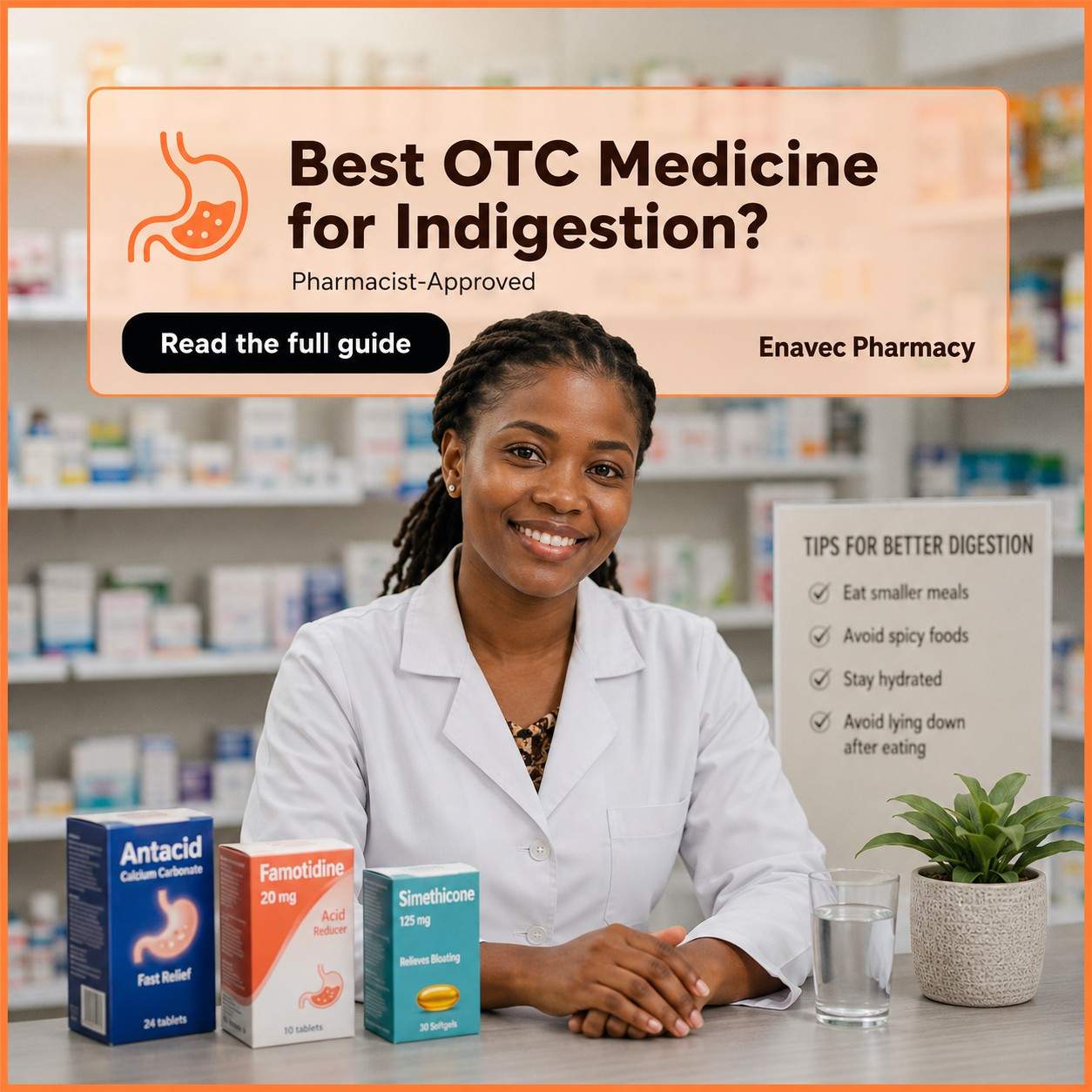
What Is the Best Over-the-Counter Medicine for Indigestion?
A calcium carbonate antacid brings the fastest relief for occasional indigestion, chewed the moment the discomfort starts. But if the bloated, sluggish feeling keeps showing up after meals, an artichoke and ginger extract targets the slow digestion behind it, not just the acid sitting on top of it. Neither one is universally right. The correct choice depends on whether your indigestion is a once-in-a-while event or a pattern.
This guide breaks down what each OTC category actually does for indigestion, where a botanical digestive blend earns a real place next to antacids, and exactly when indigestion stops being something a pharmacy shelf can solve. For the wider picture on self-care choices beyond indigestion specifically, our complete guide to over-the-counter medicines covers the full OTC aisle drug by drug.
ℹ️ All recommendations are for informational purposes. Always consult a healthcare provider before starting a new supplement or medication.
Antacids, Digestive Blends, and Enzymes: What Indigestion Actually Needs
Indigestion is not one problem with one cause, which is exactly why the pharmacy shelf has so many competing products on it. Matching the product to your actual pattern of discomfort matters more than reaching for whatever is closest.
| Option | Mechanism | Best For | Onset |
|---|---|---|---|
| Antacid (calcium carbonate) | Neutralizes acid already in the stomach | Occasional discomfort after a heavy or spicy meal | Minutes, lasts 1-2 hours |
| Artichoke & ginger extract | Supports bile flow and gastric motility | Recurring fullness, bloating, sluggish digestion | Days to weeks of regular use |
| Digestive enzymes | Breaks down proteins, fats, carbohydrates | Heaviness after fatty or large meals | With each meal, cumulative benefit |
Key Takeaway: Pick by pattern, not habit. An occasional flare after a heavy meal calls for an antacid. Fullness and bloating that return most days call for a botanical blend that supports digestion itself, not another round of acid neutralizer.
Antacids: The Fastest Fix for Occasional Indigestion
Calcium carbonate is the product most people already reach for, and for occasional indigestion it earns that reflex. It reacts directly with acid already sitting in the stomach, easing the burn or heaviness within minutes rather than preventing the next wave from forming.[1]
In my experience at the pharmacy counter, the patients who get the least value from antacids are the ones treating them like a daily maintenance medicine. That is not what calcium carbonate is built for. Take it after the meal that triggered the discomfort, not on a fixed schedule regardless of symptoms.
Pharmacist Recommended
✦ Pharmacist Pick
Chew after the meal that triggers it
Country
Life 1,000mg ACID
RESCUE
Life 1,000mg ACID
RESCUE
Calcium
Carbonate
Carbonate
Country Life
Acid Rescue, Calcium Carbonate, Berry · 60 Chewable Tablets
★★
★★
★
/ 5 · 188+ reviews
- ✓1,000mg calcium carbonate per two tablets, neutralizes acid within minutes
- ✓Clean formula, no talc or corn starch fillers
- ✓Berry flavor, chewable, no water needed
This post contains affiliate links. If you purchase through our iHerb links, we may earn a small commission at no extra cost to you. We only recommend products we would genuinely suggest to our patients.
Key Takeaway: Calcium carbonate is for the moment indigestion starts, not for preventing it across the whole day. Labels cap maximum-dose use at two weeks without a doctor's supervision for good reason.
Artichoke and Ginger Extract: For Indigestion That Keeps Coming Back
Antacids solve the acid part of indigestion. But if you have already tried one and the fullness, bloating, or sluggish feeling after meals keeps returning, the problem usually is not acid at all. It is gastric motility, how efficiently your stomach empties and moves food along.
A randomized, placebo-controlled trial of artichoke leaf extract in patients with functional dyspepsia found significant improvement in digestive symptom scores and quality of life compared to placebo over six weeks.[2] Separately, clinical research on ginger has shown it measurably speeds gastric emptying and supports normal gut motility in healthy adults.[3] Together, artichoke supports the bile flow that helps break down a meal, and ginger supports the muscle movement that clears it, which is why the combination shows up so often in pharmacist recommendations for recurring indigestion rather than either ingredient alone.
Pharmacist Recommended
✦ Pharmacist Pick
1-2 caps daily, with or without food
CGN
Digestion Pro 320mg ARTICHOKE
+ GINGER
Digestion Pro 320mg ARTICHOKE
+ GINGER
Botanical
Digestive Blend
Digestive Blend
California Gold Nutrition
Digestion Pro with ProDigest®, Artichoke & Ginger · 60 Veggie Capsules
★★
★★
★
/ 5 · well-reviewed for post-meal bloating
- ✓Standardized artichoke leaf extract shown to improve functional dyspepsia scores in a placebo-controlled trial
- ✓Ginger extract supports gastric emptying and motility
- ✓Especially helpful after heavy, rich, or fatty meals
This post contains affiliate links. If you purchase through our iHerb links, we may earn a small commission at no extra cost to you. We only recommend products we would genuinely suggest to our patients.
💬 Have a question about indigestion or which product matches your pattern of symptoms? Our PCN-licensed pharmacist answers within 2 hours on WhatsApp → https://wa.me/2347068357391
Key Takeaway: An antacid clears acid that already exists. An artichoke and ginger blend supports the digestive process that produces the fullness and bloating in the first place. Use them alongside, not instead of, each other when your symptom pattern calls for both.
What's Actually Behind Your Indigestion
Picking the right product only helps if you are not simultaneously feeding the cause. Large or fatty meals, eating too quickly, alcohol, smoking, and stress all slow digestion or irritate the stomach lining directly.[4] And in a meaningful share of cases, indigestion has nothing to do with how much acid your stomach makes at all. Slow gastric emptying, heightened gut sensitivity, and a Helicobacter pylori infection are common drivers that behave very differently from ordinary heartburn.
NSAIDs deserve a warning of their own. Ibuprofen, naproxen, and aspirin irritate the stomach lining on top of whatever else is causing the discomfort, and taking them on an empty stomach makes this worse.
💊 From the Pharmacy Counter — Iloanugo Chijioke, B.Pharm, RPhTwo cases stand out clearly. A 17-year-old with a stomach ulcer was prescribed co-codamol, contraindicated in ulcer patients, especially adolescents. I could not reach the doctor, so I recommended diclofenac with misoprostol instead, which specifically protects the gastric lining while managing pain. The second: a patient arrived with an amlodipine prescription written for 20mg. The maximum safe daily dose is 10mg. A 20mg dose would cause severe hypotension. I called the prescribing doctor. His response: "Did you go to medical school?" I told him respectfully but clearly: I am not dispensing this. I documented the interaction and sent the patient back for review. Your PCN registration number means something. You are the last clinical checkpoint before a dangerous drug reaches a patient.
That first case is the one that matters most for indigestion specifically. A painkiller prescribed without checking the stomach it is landing in is one of the most preventable causes of the gastric damage patients bring me antacids for months later, not realizing the pills themselves are the problem.
🧮 Know Your Numbers — Wondering whether your symptoms point to something beyond simple indigestion? Use our free Digestive Health & Gut Score Calculator to get a personalised assessment in under 2 minutes, no sign-up needed.
Key Takeaway: Indigestion is not always about excess acid. Slow digestion, H. pylori, and NSAIDs taken on an empty stomach are common, correctable causes worth ruling out before reaching for another antacid.
When Indigestion Stops Being a Pharmacy Problem
Most indigestion is genuinely self-treatable. A smaller number of cases are something else wearing an indigestion costume. See a doctor rather than reaching for another OTC product if any of the following apply:
- Symptoms persist beyond two to three weeks of consistent antacid or digestive blend use
- Unexplained weight loss alongside the discomfort
- Food or pills feel like they are sticking on the way down
- Vomiting blood, or material that looks like coffee grounds
- Black or tarry stools
Any one of these crosses the line from self-treatable into something a doctor's exam should rule out, particularly for anyone over 50 or anyone whose symptoms have changed character recently rather than just frequency.[5]
Key Takeaway: Persistent symptoms beyond three weeks, unexplained weight loss, trouble swallowing, or anything resembling blood are reasons to see a doctor, not reasons to try a third product off the shelf.
Myth vs Fact: What People Get Wrong About Indigestion
❌ MythIndigestion always means your stomach is making too much acid.
✅ FactFunctional indigestion often occurs with completely normal acid levels. Slow gastric emptying and gut sensitivity are frequently the actual driver.[2]
❌ MythAny digestive product on the shelf works the same way.
✅ FactAntacids only neutralize acid already present. They do nothing for slow digestion, which is why recurring bloating often needs a different approach entirely.[1][3]
❌ MythTaking more antacid tablets will eventually fix indigestion that keeps returning.
✅ FactRepeated maximum-dose antacid use masks a recurring pattern without addressing NSAID use, H. pylori, or motility issues underneath it.[1]
Pharmacist Verdict
If I had to hand you one product without knowing anything else, it would depend on how often the discomfort shows up. An occasional flare after a heavy meal gets a calcium carbonate antacid, chewed right when it starts. Indigestion that returns most days after eating gets an artichoke and ginger blend, taken consistently rather than reached for only when things feel bad. What worries me most is not which product people pick. It is the patient who has been buying the same antacid every week for months without ever mentioning it to anyone, especially if they are also taking a daily painkiller. That pattern deserves a proper look, not another box off the shelf.
Signed: Iloanugo Chijioke, B.Pharm, RPh, PCN Reg. No. 020322
Frequently Asked Questions
A calcium carbonate antacid works fastest for occasional indigestion, easing symptoms within minutes by neutralizing acid already in the stomach. For indigestion that keeps returning after meals, a combined artichoke and ginger extract targets sluggish digestion itself rather than just the acid, and has clinical trial evidence behind it.
Large or fatty meals, eating too quickly, alcohol, NSAIDs like ibuprofen, smoking, stress, and a Helicobacter pylori infection are the most common causes. In many cases indigestion happens with completely normal stomach acid levels, driven instead by slow gastric emptying or gut sensitivity.
Most antacid labels advise against using the maximum dose for more than two weeks without a doctor's supervision. Daily indigestion that needs daily antacids is a sign the underlying cause, not just the symptom, needs a proper look from a pharmacist or doctor.
Yes. Clinical research shows ginger speeds up gastric emptying and supports normal gut motility, which is often slowed in people with functional indigestion. Combined with artichoke leaf extract, which supports bile flow, it addresses the digestive process itself rather than only masking discomfort.
Yes. NSAIDs irritate the stomach lining directly and are one of the most common preventable causes of indigestion and, in more serious cases, stomach ulcers. Taking them with food and for the shortest necessary course reduces this risk significantly.
See a doctor if indigestion lasts more than two to three weeks despite OTC treatment, or if it comes with unexplained weight loss, difficulty swallowing, vomiting blood or dark material, or black stools. These signs need proper investigation rather than another product off the shelf.
Related Reading
Commonly Searched Topics
References
- DailyMed, U.S. National Library of Medicine. TUMS (calcium carbonate) drug facts label. dailymed.nlm.nih.gov
- Holtmann G, Adam B, Haag S, et al. Efficacy of artichoke leaf extract in the treatment of patients with functional dyspepsia: a six-week placebo-controlled, double-blind, multicentre trial. Aliment Pharmacol Ther. 2003. pubmed.ncbi.nlm.nih.gov
- Wu KL, Rayner CK, Chuah SK, et al. Effects of ginger on gastric emptying and motility in healthy humans. Eur J Gastroenterol Hepatol. 2008. pubmed.ncbi.nlm.nih.gov
- NHS. Indigestion. nhs.uk
- Mayo Clinic. Indigestion: Symptoms & causes. mayoclinic.org
- NIDDK. Indigestion (Dyspepsia). niddk.nih.gov
This article is for informational purposes only and does not constitute medical advice. Always consult your pharmacist or doctor before starting any medicine or supplement, particularly if you are pregnant, breastfeeding, managing a chronic condition, or taking other prescription medicines.
Found this helpful? Share it:
⚠️
Medical & Affiliate Disclaimer This article is for informational purposes only and does not constitute medical advice. Always consult a qualified healthcare provider before starting any supplement or medication. Some links in this post are affiliate links - if you purchase through them, Enavec Pharmacy may earn a small commission at no extra cost to you.
