
- Your cart is empty
- Continue Shopping
Why do antibiotics not work for viral infections?
- Antibiotics
- Posted on
-
by enavec_pharmacy
- 0 comments
Why Do Antibiotics Not Work for Viral Infections?
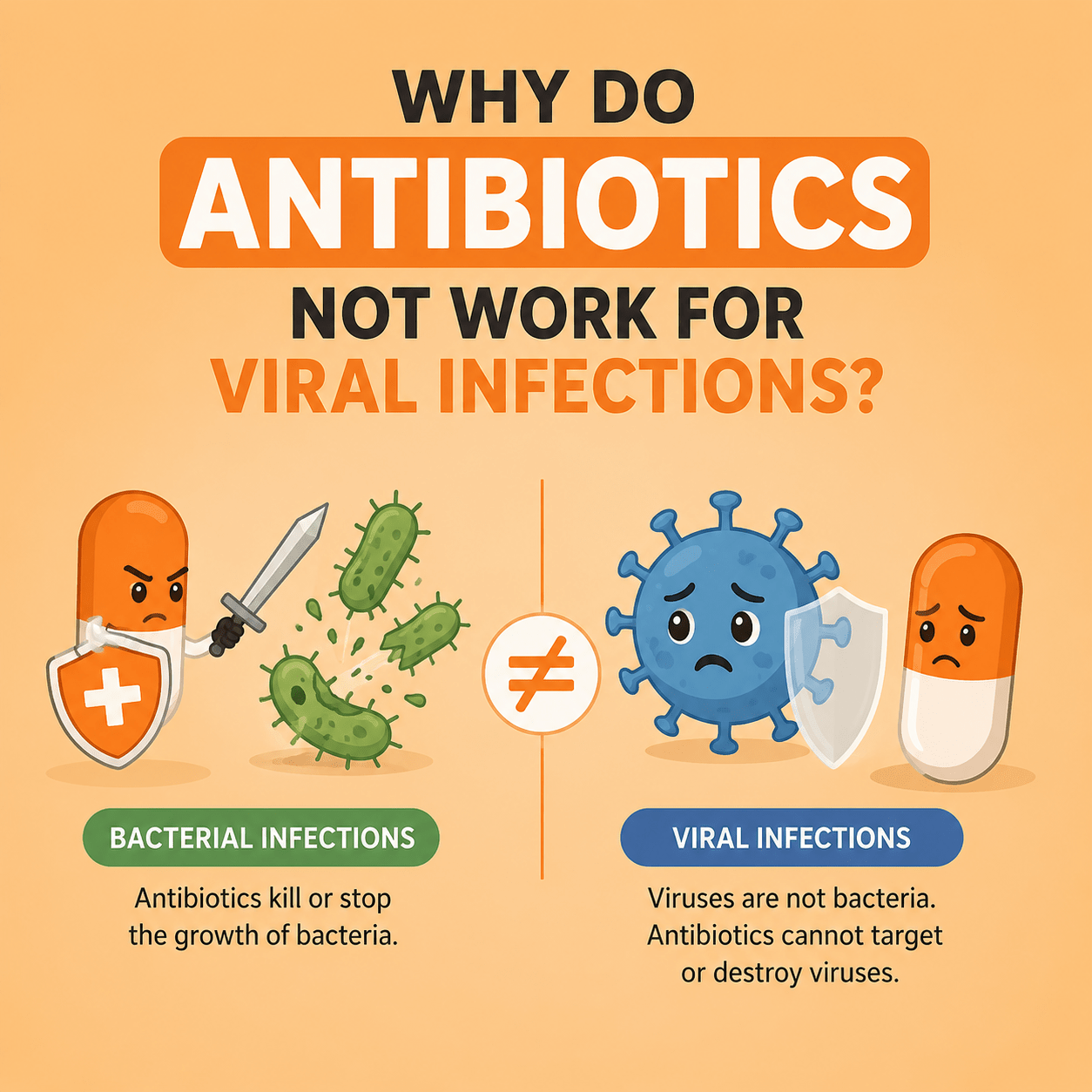
Short answer: Antibiotics kill or stop bacteria. They have zero effect on viruses. The two are built completely differently, and antibiotics are designed to attack structures that viruses simply do not have. Taking an antibiotic for a cold, flu, or COVID-19 will not help you recover faster. It can cause real harm.
If a doctor or pharmacist has ever told you "there's no antibiotic for this one," that was not a dismissal. That was accurate advice. But patients ask for antibiotics anyway. Sometimes daily at my counter. Because the biology behind the refusal is rarely explained. This article does that. Clearly, without jargon, and without talking down to you.
Bacteria and Viruses: Two Completely Different Things
The difference between bacteria and viruses is not just size. It is their entire biological architecture. And that architecture is exactly why antibiotics work on one and are powerless against the other.
| Feature | Bacteria | Viruses |
|---|---|---|
| Cell structure | Single-celled living organisms | Not cells. Genetic material wrapped in a protein coat |
| Reproduction | Reproduce on their own by dividing | Cannot reproduce alone. Must hijack a host cell |
| Cell wall | Have a cell wall | No cell wall |
| Ribosomes | Have ribosomes (protein factories) | No ribosomes |
| Metabolism | Have their own metabolic processes | No independent metabolism |
| Examples | Strep throat, UTIs, typhoid, TB | Common cold, flu, COVID-19, HIV, hepatitis |
Bacteria are living cells. They eat, grow, divide, and survive independently. Viruses are not truly alive by the conventional definition. A virus is a set of genetic instructions wrapped in a protein shell. It cannot do anything at all except invade your cells and use your own cellular machinery to copy itself.[1]
Bacteria have a cell wall, ribosomes, and independent metabolism: all structures antibiotics can target. Viruses have none of these. There is nothing for an antibiotic to attack.
How Antibiotics Work and Why Viruses Are Invisible to Them
Antibiotics are not general-purpose germ killers. Each class works by targeting one specific structure that bacteria have and that human cells do not. That specificity is what makes them safe to take. But it is also why viruses are immune.
- Penicillins and cephalosporins attack the bacterial cell wall. Viruses have no cell wall, so these drugs find nothing to target.
- Macrolides like azithromycin block bacterial ribosomes, the machinery bacteria use to make proteins. A virus does not have ribosomes. It uses yours.
- Fluoroquinolones like ciprofloxacin block the enzymes bacteria use to copy their own DNA. Viruses replicate using your cellular enzymes, not bacterial ones. Ciprofloxacin cannot touch them.
- Tetracyclines also block bacterial ribosomes. Same problem. Viruses have none.
In every case, the antibiotic is a key looking for a specific lock. Viruses do not have that lock. The antibiotic passes through and does nothing.[2]
And it is not just that the antibiotic misses the virus. While it is busy finding nothing to attack, it is still affecting every bacterium in your gut, throat, and skin, including the beneficial ones. That matters.
Every antibiotic class targets a structure unique to bacteria. Viruses share none of those structures, so no antibiotic can interfere with how a virus replicates or survives inside you.
From the Pharmacy Counter: Iloanugo Chijioke, B.Pharm, RPh, PCN 020322
One of the patterns I observe most frequently at my counter in Lagos, and I know colleagues across West Africa report the same, is the patient who arrives with a cold or flu, certain they need amoxicillin or azithromycin. They have either been told so by a well-meaning relative, or they took an antibiotic for a viral illness before and felt better afterward. That last point is the important one: they felt better anyway, because most viral respiratory illnesses resolve on their own in 7 to 10 days. The antibiotic did not cause the improvement. Time and the immune system did.
What the antibiotic did do, silently and invisibly, was expose the bacteria normally living in that person's gut and respiratory tract to unnecessary antibiotic pressure. Some of those bacteria survived by developing resistance. Now, when that patient genuinely needs an antibiotic for a real bacterial infection in the future, the drug may not work as well. I explain this every time. Not to lecture. But because the person standing in front of me deserves to understand the actual consequence of the choice they are about to make.
Have a question about antibiotics or your current medication?
Our PCN-licensed pharmacist answers within 2 hours.
Common Viral Infections People Treat With Antibiotics (And Shouldn't)
Every illness below is caused by a virus. Antibiotics will not treat them, shorten how long they last, or prevent complications in most cases.[3]
Common coldInfluenza (flu)COVID-19
Viral sore throatChickenpoxViral gastroenteritis
Dengue feverHepatitis A, B, CMeasles
MumpsBronchitis (most cases)Most ear infections in children
Sore throat is worth singling out. It can be viral (most often the case) or bacterial, as in streptococcal infection. The two feel almost identical. But only a throat swab or rapid strep test can tell you which one you have. Self-treating with an antibiotic for a sore throat is a real gamble: you may be putting your body through side effects and building resistance for something an antibiotic could never touch.[4]
Important: Bacterial pneumonia and bacterial ear infections do require antibiotics. Viral pneumonia and most ear infections in young children do not. Only a healthcare professional can tell the difference.
Most upper respiratory infections (colds, coughs, sore throats, flu) are viral. Antibiotics will not help them. Taking one anyway just means side effects with none of the benefit.
What Actually Happens When You Take Antibiotics for a Viral Infection?
Taking an antibiotic when you don't need one is not neutral. It carries real consequences. For the full picture, see our article on what happens when you take antibiotics unnecessarily. But here is what matters most:
Antibiotic Resistance
Every unnecessary antibiotic course exposes the bacteria living in your body to the drug. Some survive by developing resistance. Those resistant bacteria multiply and can spread to others. This is how we end up with infections that no antibiotic can kill. It is already causing millions of deaths every year.[5] And it starts with the individual decision to take an antibiotic for a cold.
Gut Microbiome Disruption
Your gut contains trillions of bacteria that protect digestion, immunity, and even mental health. Antibiotics do not distinguish between harmful bacteria and beneficial ones. They disrupt the whole ecosystem. This is why diarrhoea is the most common antibiotic side effect. For more on this, see our article on whether antibiotics cause diarrhoea.[6]
Allergic Reactions and Side Effects
Antibiotics are not harmless pills. Penicillin allergy affects roughly 10% of people and can be life-threatening in severe cases. Fluoroquinolones can cause tendon damage. Tetracyclines affect developing teeth in children. But none of these risks have any benefit attached when the infection is viral.[7]
No Effect on Recovery Time
Patients often credit an antibiotic with their recovery from a viral illness. But the recovery was coming anyway. Viral illnesses run a natural course. The antibiotic happened to be present during a recovery that your immune system was already driving. That is a coincidence, not a pharmacological effect.
Antibiotics for viral infections: zero benefit, real risks. The gut disruption, allergic reactions, and resistance you accumulate have nothing to show for them when the virus was always going to clear on its own.
Check Your Risk
How much does your antibiotic use pattern contribute to resistance? Take our free Antibiotic Resistance Risk Quiz. Under 2 minutes, no sign-up needed.
Take the Antibiotic Resistance Risk QuizMyth vs. Fact: Antibiotics and Viral Infections
MYTH
Antibiotics are a strong general medicine that helps the body fight any infection faster.
FACT
Antibiotics are a specific tool targeting bacterial cell structures. They have zero activity against viruses, which are structurally different organisms entirely.[1]
MYTH
"I took amoxicillin for my cold and felt better after a few days, so it worked."
FACT
Most colds resolve naturally in 7 to 10 days regardless of treatment. The recovery was your immune system working, not the antibiotic. This is a timing coincidence, not a drug effect.[3]
MYTH
Taking an antibiotic "just in case" stops a viral illness from turning into something worse.
FACT
Prophylactic antibiotics are only appropriate in specific, clinically-defined situations. Taking them during a viral illness does not prevent secondary bacterial infection and actively contributes to resistance.[5]
MYTH
A doctor who refuses to prescribe antibiotics for a throat infection is being negligent.
FACT
The opposite is true. A clinician who declines to prescribe antibiotics for a suspected viral illness is practising responsible medicine that protects both your health and public health.[4]
MYTH
Azithromycin works for COVID-19 because it is a strong antibiotic.
FACT
Multiple large randomised trials, including the WHO SOLIDARITY trial, found azithromycin provided no benefit for COVID-19. COVID-19 is a virus. Azithromycin cannot act on viruses.[8]
MYTH
Antiviral drugs are just antibiotics with a different name.
FACT
Antivirals like oseltamivir, acyclovir, and antiretrovirals work through entirely different mechanisms designed to interfere with viral replication. They share no mechanism with antibiotics.[2]
What Should You Actually Take for a Viral Infection?
Managing a viral illness means supporting your immune system and managing symptoms while the virus runs its course. Here is what helps.
Symptom Relief
- Fever and body aches: Paracetamol or ibuprofen at the correct dose for most adults.
- Nasal congestion: Saline nasal sprays and decongestants.
- Cough: Honey has some evidence for mild relief. Stay hydrated. Steam inhalation can help loosen mucus.
- Sore throat: Warm salt-water gargles, throat lozenges, and plenty of fluids.
What About Antivirals?
For some viruses, specific antiviral medicines do exist. Oseltamivir (Tamiflu) can reduce the duration of influenza if started within 48 hours of symptoms. Acyclovir treats herpes and chickenpox. Antiretroviral therapy is essential and life-saving for HIV. None of these are over-the-counter options. They require a prescription and a proper diagnosis from a licensed clinician.[2]
When to Get Medical Help Immediately
Go to a clinic or hospital if you develop: difficulty breathing, persistent chest pain, confusion or altered consciousness, severe dehydration, a fever above 39.5 degrees C that does not respond to paracetamol, or if you are elderly, immunocompromised, pregnant, or caring for a young child with worsening symptoms.
For most viral illnesses: rest, fluids, and appropriate symptom relief. For specific viral conditions, prescription antivirals may be appropriate, but only after a proper diagnosis from a doctor.
The Bigger Picture: Why This Question Matters Beyond You
Antibiotic resistance is classified by the WHO as one of the greatest threats to global health. And it is not driven by hospitals alone. It is driven, in large part, by individual decisions, including every unnecessary antibiotic taken for a cold, flu, or other viral illness.[5]
For a complete guide to how antibiotics work, when they are genuinely needed, and how resistance develops, read our pillar article: Antibiotics: Uses, Misuse and Resistance Explained.
Patients ask me regularly whether they can use leftover antibiotics from a previous illness for a new one. The answer is always no. The previous antibiotic may be the wrong drug entirely. The new infection may be viral and untreatable with antibiotics anyway. And leftover partial courses are a direct route to resistance. Bring unused antibiotics to your pharmacist for safe disposal.
PHARMACIST'S VERDICT
Let me be direct about what I see happening. Patients come to my counter with viral illnesses wanting antibiotics, and in many settings across Nigeria and West Africa, they get them. Because the patient expects them, because a relative swore by them, because doing something feels better than doing nothing. But handing over an antibiotic that cannot work is not care. It is a missed opportunity to explain what is actually happening in the patient's body, and an active contribution to the resistance problem that is already killing people.
What I tell every patient who asks: your immune system is working. The virus will run its course. What you need right now is rest, fluids, and paracetamol for the fever. What you do not need is an antibiotic that will expose every bacterium in your gut to pressure it does not need and may not recover from cleanly.
The antibiotic you don't take today for a cold may be the one that actually works when you have a real bacterial infection next year. That is not a slogan. That is pharmacology.
Iloanugo Chijioke, B.Pharm, RPh, PCN Reg. No. 020322 | Enavec Pharmacy, Lagos
Frequently Asked Questions
Antibiotics will not directly worsen the viral infection itself, but they cause real harm: gut microbiome disruption, diarrhoea, yeast overgrowth, allergic reactions, and antibiotic resistance. None of these harms have any benefit to offset them when the infection is viral.
Clinicians use symptom pattern, physical examination, duration of illness, and laboratory tests, including a full blood count (raised neutrophils suggest bacterial, raised lymphocytes suggest viral), throat swabs, or urine cultures. No symptom alone is definitive, which is why self-diagnosis and self-treatment are unreliable.
Yes. This is called a secondary bacterial infection. A viral cold can lead to bacterial sinusitis or pneumonia. Signs this may have happened: fever that worsens after initial improvement, worsening coloured discharge, or new localised pain in the sinuses or chest. See a clinician if you suspect this has occurred.[4]
Yes. Antivirals like oseltamivir for influenza, acyclovir for herpes viruses, and antiretrovirals for HIV interfere with viral replication through completely different mechanisms from antibiotics. They target viral-specific processes and require a prescription and confirmed diagnosis.
Patient pressure, clinical uncertainty early in illness, inadequate diagnostic tools in lower-resource settings, and concerns about secondary bacterial infection all contribute to antibiotic over-prescription. This is a well-documented global problem and the primary driver of antibiotic resistance.
Probiotics don't treat viral infections. But if you're prescribed an antibiotic for a secondary bacterial infection, taking a probiotic 2 hours apart from each dose may help reduce antibiotic-associated diarrhoea. Ask your pharmacist for a suitable formulation.
Read More From Our Antibiotics and Misuse Series
- Centers for Disease Control and Prevention. Antibiotic Use and Resistance. cdc.gov
- Voet D, Voet JG. Biochemistry (4th ed). Hoboken: Wiley; 2011.
- Kenealy T, Arroll B. Antibiotics for the common cold. Cochrane Database Syst Rev. 2013;6:CD000247. doi:10.1002/14651858.CD000247.pub3
- Shulman ST, et al. Clinical practice guideline for group A streptococcal pharyngitis. Clin Infect Dis. 2012;55(10):1279-1282. doi:10.1093/cid/cis847
- World Health Organization. Global Antimicrobial Resistance and Use Surveillance System (GLASS) Report 2023. Geneva: WHO; 2023. who.int
- Blaser MJ. Antibiotic use and its consequences for the normal microbiome. Science. 2016;352(6285):544-545. doi:10.1126/science.aad9358
- Joint Task Force on Practice Parameters. Drug allergy: an updated practice parameter. Ann Allergy Asthma Immunol. 2010;105(4):259-273.
- RECOVERY Collaborative Group. Azithromycin in patients admitted to hospital with COVID-19 (RECOVERY). Lancet. 2021;397(10274):605-612. doi:10.1016/S0140-6736(21)00149-5
Disclaimer: This article is for informational purposes only and does not constitute medical advice. Always consult your pharmacist or doctor before starting, stopping, or changing any medicine. If you are experiencing a medical emergency, contact your nearest hospital or emergency services immediately.
Found this helpful? Share it:
⚠️
Medical & Affiliate Disclaimer This article is for informational purposes only and does not constitute medical advice. Always consult a qualified healthcare provider before starting any supplement or medication. Some links in this post are affiliate links - if you purchase through them, Enavec Pharmacy may earn a small commission at no extra cost to you.
