
- Your cart is empty
- Continue Shopping
What is the best over-the-counter medicine for cold symptoms?
- OTC and Self-Care
- Posted on
-
by enavec_pharmacy
- 0 comments
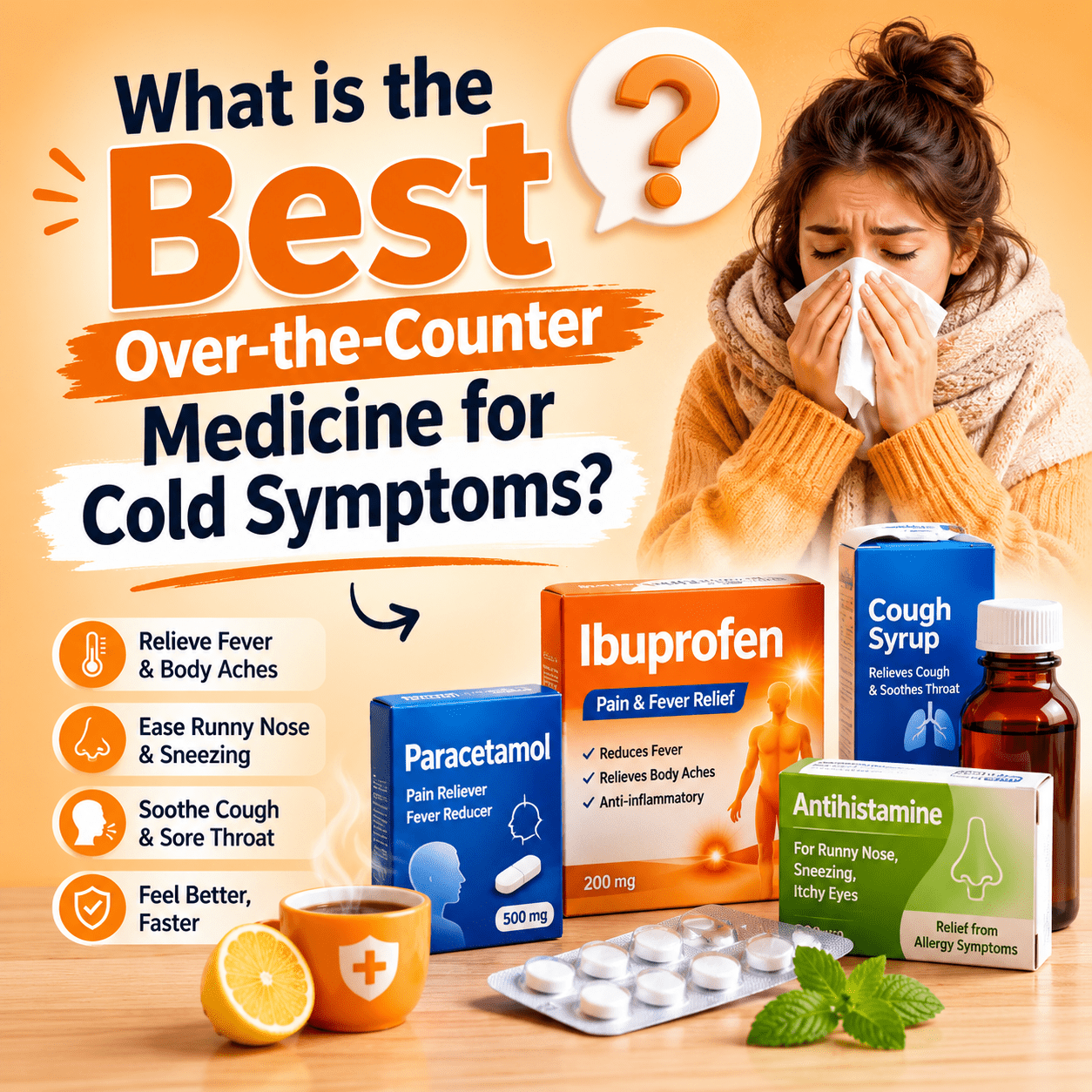
The best over-the-counter medicine for cold symptoms is not a single product but a combination chosen to match your specific symptoms: a decongestant for a blocked nose, paracetamol or ibuprofen for fever and body aches, a cough medicine for the cough, and zinc lozenges at the first sign of illness to cut how long you are sick. The cold is caused by a virus (most often rhinovirus), which means antibiotics will not help you, but the right OTC medicines and supplements can make a real difference to how you feel while your immune system does the work.[1]
Every year, adults worldwide experience an average of two to four colds.[2] Children get even more. Walk into any pharmacy and the cold remedy shelf can be overwhelming. But most multi-symptom cold products contain the same few active ingredients packaged together at premium prices. This guide breaks down what actually works, what the evidence says, and what to take for each symptom so you get better faster and spend less.
2-4
colds per year for the average adult worldwide[2]
7-10
days most colds last without treatment
200+
different viruses can cause common cold symptoms[1]
Match Your Medicine to Your Symptom
This is the part most people skip, and it is why so many people end up spending money on products that do not help them. The common cold rarely shows up with one symptom. But each symptom has a different mechanism, and the OTC medicines that work best are targeted at the specific problem.
Before you go to the pharmacy, ask yourself: is my main problem a blocked nose, a sore throat, a dry irritating cough, a fever, or all of the above? Your answer should determine what you buy.
| Cold Symptom | Best OTC Approach | Key Active Ingredient | Important Warning |
|---|---|---|---|
| Blocked nose / congestion | Oral decongestant or nasal spray | Pseudoephedrine, oxymetazoline | Do not use nasal spray decongestants for more than 3 days (rebound congestion) |
| Fever and body aches | Analgesic / antipyretic | Paracetamol 500-1000mg, ibuprofen 400mg | Do not exceed 4g paracetamol per day; take ibuprofen with food |
| Dry, tickling cough | Cough suppressant | Dextromethorphan (DXM) | Not suitable for children under 12 in most countries |
| Chesty / productive cough | Expectorant (loosens mucus) | Guaifenesin | Drink plenty of water for best effect |
| Runny nose / sneezing | First-generation antihistamine | Chlorphenamine (chlorpheniramine) | Causes drowsiness; do not drive |
| Sore throat | Anaesthetic throat lozenges or gargle | Benzocaine, lidocaine, benzydamine | Do not use for more than 3-5 days without review |
| General immune support | Zinc lozenges (start early) | Zinc acetate or zinc gluconate | Take within 24 hours of first symptoms for best effect[3] |
💡 Key Takeaway
There is no single pill that treats all cold symptoms equally well. Buy for what you actually have, not for everything listed on the box. One targeted medicine taken correctly will beat a multi-symptom product where you only need two of the six ingredients.
Paracetamol vs Ibuprofen: Which Is Better for Cold Symptoms?
Both paracetamol and ibuprofen reduce fever and relieve the muscle aches and headaches that come with a cold. They work differently. Paracetamol acts on the brain's pain and temperature regulation centres. Ibuprofen is an NSAID that also reduces the inflammation driving many cold symptoms.
For most healthy adults with a cold, ibuprofen may have a slight edge for symptoms caused by inflammation, including a sore throat and sinus pressure. Paracetamol is the safer choice if you have a history of stomach ulcers, kidney problems, or are pregnant. You can alternate them, taking one every three hours in a staggered schedule, but do not take both together at the same time.
The most common mistake I see at the pharmacy counter is people taking ibuprofen on an empty stomach during a cold, when they are already not eating much. That combination is how you end up with gastric irritation on top of a blocked nose. Always eat something first, even if it is just crackers or a small piece of bread.
For children, ibuprofen is appropriate from age three months (by weight-based dose) and paracetamol from two months. Aspirin should never be given to children under 16 with viral infections due to the risk of Reye's syndrome.[4]
Pharmacist Recommended
✦ Pharmacist Pick
Dissolve 1 lozenge at first symptoms
NOW
Foods 60 Lozenges ZINC-C +
ELDERBERRY
Foods 60 Lozenges ZINC-C +
ELDERBERRY
Immune
Support
Support
NOW Foods
Sambucus Zinc-C Lozenges · Elderberry + Vitamin C · 60 Lozenges
★★★★★
/ 5 · 900+ reviews
- ✓Zinc gluconate + vitamin C + elderberry 10:1 concentrate in one lozenge
- ✓Zinc lozenges have clinical evidence for shortening cold duration when started within 24 hours[3]
- ✓Suitable for adults and children age 4 and over; sugar-free formula
This post contains affiliate links. If you purchase through our iHerb links, we may earn a small commission at no extra cost to you. We only recommend products we would genuinely suggest to our patients.
💡 Key Takeaway
For fever and body aches, paracetamol is safer for the stomach and is first-choice in pregnancy. Ibuprofen gives slightly better relief for inflammation-driven symptoms like sore throat and sinus pressure. Always take ibuprofen with food.
Does Vitamin C Actually Work for Colds?
Vitamin C is the supplement most people reach for when a cold hits. The evidence is worth understanding, because it probably does not work the way most people think it does.
A large Cochrane review found that taking vitamin C consistently, not just when you feel ill, reduced cold duration by about 8% in adults and up to 14% in children.[5] That translates to roughly half a day shorter for an adult cold. Starting vitamin C only after symptoms begin offers very little benefit. But if you already have low vitamin C levels, correcting that deficiency can meaningfully support immune function.
What vitamin C does not do is prevent colds in the general population. With one exception: people under high physical stress (marathon runners, soldiers on Arctic exercises) showed a 50% reduction in cold incidence with regular vitamin C supplementation.[5] For everyone else, it is more about duration and severity than prevention.
Patients frequently ask me whether they should take 1,000mg or more per day during a cold, and my answer is always: 1,000mg once daily is a reasonable dose for most adults and is unlikely to cause harm. Your kidneys excrete what you do not use. Going above 2,000mg per day increases the risk of kidney stones and digestive upset in some people, so there is no reason to go higher.[6]
Budget-Friendly Pick
✦ Pharmacist Pick
Take 1 capsule daily with or without food
California
Gold 1,000mg VITAMIN C
USP Grade
Gold 1,000mg VITAMIN C
USP Grade
Vitamin C
Capsules
Capsules
California Gold Nutrition
Gold C® USP Grade Vitamin C 1,000mg · 60 Veggie Capsules
★★★★★
/ 5 · 3,500+ reviews
- ✓USP Grade L-ascorbic acid, triple quality tested for purity and potency
- ✓Full 1,000mg dose per capsule, suitable for vegetarians, gluten-free, non-GMO
- ✓Powder in veggie capsule form absorbs well and is gentler on the stomach than tablets for most people
💡 Key Takeaway
Vitamin C works best as a daily supplement taken consistently, not as a rescue remedy started when symptoms hit. A 1,000mg daily dose is safe and practical for most adults. In Nigeria, look for products with NAFDAC registration; internationally, USP or NSF certification signals quality assurance.
💬 Have a question about cold medicines or which combination is right for your symptoms? Our PCN-licensed pharmacist answers within 2 hours on WhatsApp: Chat with us now
What About Decongestants? Nasal Spray vs Oral Tablets
Decongestants work by narrowing the blood vessels in your nasal lining, which reduces swelling and opens up your airway. They are among the most effective OTC treatments for that miserable blocked-nose sensation during a cold.
You have two main routes: a nasal spray (typically oxymetazoline or xylometazoline) or an oral tablet (pseudoephedrine or phenylephrine). The nasal sprays work faster and stay local, meaning less goes into your bloodstream. But use a nasal decongestant spray for more than three consecutive days and you risk rhinitis medicamentosa (rebound congestion). Your nose becomes dependent on the spray and gets blocked the moment it wears off. It can take weeks to reverse.
Oral decongestants take longer to work but do not carry the same rebound risk. Pseudoephedrine is clinically the more effective oral option compared to phenylephrine, though availability varies by country. If you have hypertension, heart disease, or are on certain antidepressants, speak to your pharmacist before using any decongestant, as they can raise blood pressure and heart rate.[7]
💊 From the Pharmacy Counter: Iloanugo Chijioke, B.Pharm, RPh, PCN 020322
The combination question I answer most often at my counter is whether paracetamol and ibuprofen can be taken together. Most patients are not asking because they are curious. They have already taken both and are worried, or they plan to take both because one alone is not working. The most dangerous misunderstanding I correct is that taking both simultaneously makes the pain relief stronger. It does not work that way. Paracetamol acts centrally on pain signals; ibuprofen reduces inflammation at the site. They can be used in a staggered schedule, one every three hours alternating, but they should not be swallowed at the same time. And ibuprofen should never be taken on an empty stomach.
💡 Key Takeaway
Nasal decongestant sprays are fast and effective but must not be used for more than three days in a row. Oral decongestants are safer for longer use but should be avoided if you have high blood pressure or heart disease. Ask your pharmacist before buying.
Myth vs Fact: Common Cold Medicine Misconceptions
❌ Myth"Antibiotics will clear up my cold faster."
✔ FactThe common cold is caused by a virus. Antibiotics kill bacteria, not viruses. Taking antibiotics for a cold has zero effect on how long it lasts and contributes to antibiotic resistance.[8]
❌ Myth"A high-dose vitamin C tablet the moment symptoms start will stop the cold."
✔ FactClinical evidence shows vitamin C works best when taken consistently before illness, not as a rescue dose. A 2013 Cochrane review found therapeutic vitamin C did not consistently reduce cold duration.[5]
❌ Myth"Sweating it out by staying in a hot room helps cure a cold."
✔ FactThere is no evidence that artificially raising your body temperature shortens a cold. Rest, adequate fluids, and targeted OTC medicines for your symptoms are what help. Dehydration will make you feel worse.[1]
❌ Myth"Multi-symptom cold products are better value than single-ingredient medicines."
✔ FactMulti-symptom products often contain ingredients you do not need and come at a higher price. If you only have a blocked nose and fever, a decongestant and paracetamol separately cost less and give you exactly what you need.
🧮 Check Your Immune System Strength
Wondering why you keep catching colds? Use our free Immune System Strength Score to get a personalised assessment of your immune health in under 2 minutes. Take the free assessment
Wondering why you keep catching colds? Use our free Immune System Strength Score to get a personalised assessment of your immune health in under 2 minutes. Take the free assessment
When OTC Medicines Are Not Enough: Red Flag Symptoms
Most colds resolve on their own within 7 to 10 days.[1] OTC medicines manage symptoms during that time. But there are signs that what you have is not a simple cold, or that a complication has developed that needs medical review.
See a doctor if any of these apply. A fever above 39°C that does not come down with paracetamol. Symptoms that get significantly worse after day five instead of improving. Chest pain, difficulty breathing, or wheezing that was not there before. A stiff neck with headache and sensitivity to light. Ear pain or sharp sinus pain. And in children under three months of age, any fever at all is a reason to seek same-day medical review.[4]
One of the most commonly missed cold complications I see in practice is secondary bacterial sinusitis. Patients treat what they think is a persistent cold for two weeks, but the pressure behind their cheeks and eyes, the thick yellow-green discharge, and the pain that worsens when they bend forward are signs the cold triggered a bacterial sinus infection. That one actually does need antibiotics, but a specific type and for the right duration.
You can also learn more in our Over-the-Counter Medicines Complete Guide, or read our specific guides on the best OTC medicines for cough and the best OTC medicines for sore throat.
💡 Key Takeaway
OTC cold medicines treat symptoms, not the virus. If your symptoms are worsening after day 5, if your fever is very high, or if breathing becomes difficult, stop self-treating and see a doctor. A child under three months with any fever needs same-day medical attention.
Pharmacist Verdict
The most practical cold treatment approach is this: paracetamol or ibuprofen for fever and body aches (choose based on your stomach and health history), a decongestant nasal spray for short-term nasal relief (three days maximum), zinc lozenges started within 24 hours of first symptoms to shorten duration, and rest with adequate fluids. That combination will get you through most colds faster than any expensive multi-symptom product on the shelf.
And stop asking for antibiotics. I understand the instinct to want something decisive when you feel awful. But an antibiotic will not shorten your cold by a single hour. What it will do is disrupt your gut bacteria, and if you misuse it enough times, leave you with limited options when you actually need one for a bacterial infection later.
For children, always confirm the correct dose by weight before giving anything, and keep adult cold medicines out of reach entirely. Adult formulations are not just adult-sized versions of children's products. The concentrations are different.
Iloanugo Chijioke, B.Pharm, RPh, PCN Reg. No. 020322, Enavec Pharmacy, Lagos
Frequently Asked Questions
There is no single best OTC cold medicine because the common cold produces multiple symptoms. A combination approach works best: a decongestant for a blocked nose, paracetamol or ibuprofen for fever and body aches, a cough suppressant for dry cough, and zinc lozenges to shorten illness duration. Buy for the symptoms you actually have.
Vitamin C does not prevent colds in most adults but may reduce how long and severe your cold is if taken regularly before you get sick. Research suggests it may shorten cold duration by about 8% in adults and up to 14% in children. Starting it only after symptoms begin provides much less benefit than taking it consistently.
Yes, but staggered rather than at the same time. Take one, then approximately three hours later take the other. Never exceed the maximum daily dose of either, and always take ibuprofen with food to protect your stomach lining.
Most colds resolve within 7 to 10 days. See a doctor if your fever is above 39°C and does not respond to paracetamol, if symptoms worsen after day 5, if you have chest pain or difficulty breathing, or if a child under 3 months has any fever at all.
No. Antibiotics do not work for the common cold because colds are caused by viruses, not bacteria. Taking antibiotics for a cold will not shorten your illness or reduce your symptoms, and it contributes directly to antibiotic resistance. There is no antibiotic that kills a cold virus.
Paracetamol is the safest OTC option for fever and body aches during pregnancy, but use the lowest effective dose for the shortest time necessary. Ibuprofen, decongestants, and most antihistamines are generally not recommended during pregnancy. Always speak with your doctor or pharmacist before taking any medicine while pregnant.
Related Articles
References
- Heikkinen T, Järvinen A. The common cold. Lancet. 2003;361(9351):51-59. thelancet.com
- Mäkelä MJ, et al. Viruses and bacteria in the etiology of the common cold. J Clin Microbiol. 1998;36(2):539-542. journals.asm.org
- Science M, et al. Zinc for the treatment of the common cold. CMAJ. 2012;184(10):E551-E561. cmaj.ca
- National Institute for Health and Care Excellence. Common cold. Clinical Knowledge Summary. cks.nice.org.uk
- Hemilä H, Chalker E. Vitamin C for preventing and treating the common cold. Cochrane Database Syst Rev. 2013;(1):CD000980. cochranelibrary.com
- National Institutes of Health Office of Dietary Supplements. Vitamin C Fact Sheet. ods.od.nih.gov
- Horak F, et al. Pseudoephedrine/paracetamol combination for rhinitis. Rhinology. 2009;47(3):258-262. rhinologyjournal.com
- World Health Organization. Antibiotic resistance. who.int
Disclaimer: This article is for informational purposes only and does not constitute medical advice. Always consult your pharmacist or doctor before starting any medicine or supplement, particularly if you are pregnant, breastfeeding, have a chronic health condition, or are taking other medications.
Found this helpful? Share it:
⚠️
Medical & Affiliate Disclaimer This article is for informational purposes only and does not constitute medical advice. Always consult a qualified healthcare provider before starting any supplement or medication. Some links in this post are affiliate links - if you purchase through them, Enavec Pharmacy may earn a small commission at no extra cost to you.
