
- Your cart is empty
- Continue Shopping
Drug Interaction Checker: The Complete Guide to Checking Herbal and Orthodox Medications Safely
- drugs safety
- Posted on
-
by enavec_pharmacy
- 0 comments
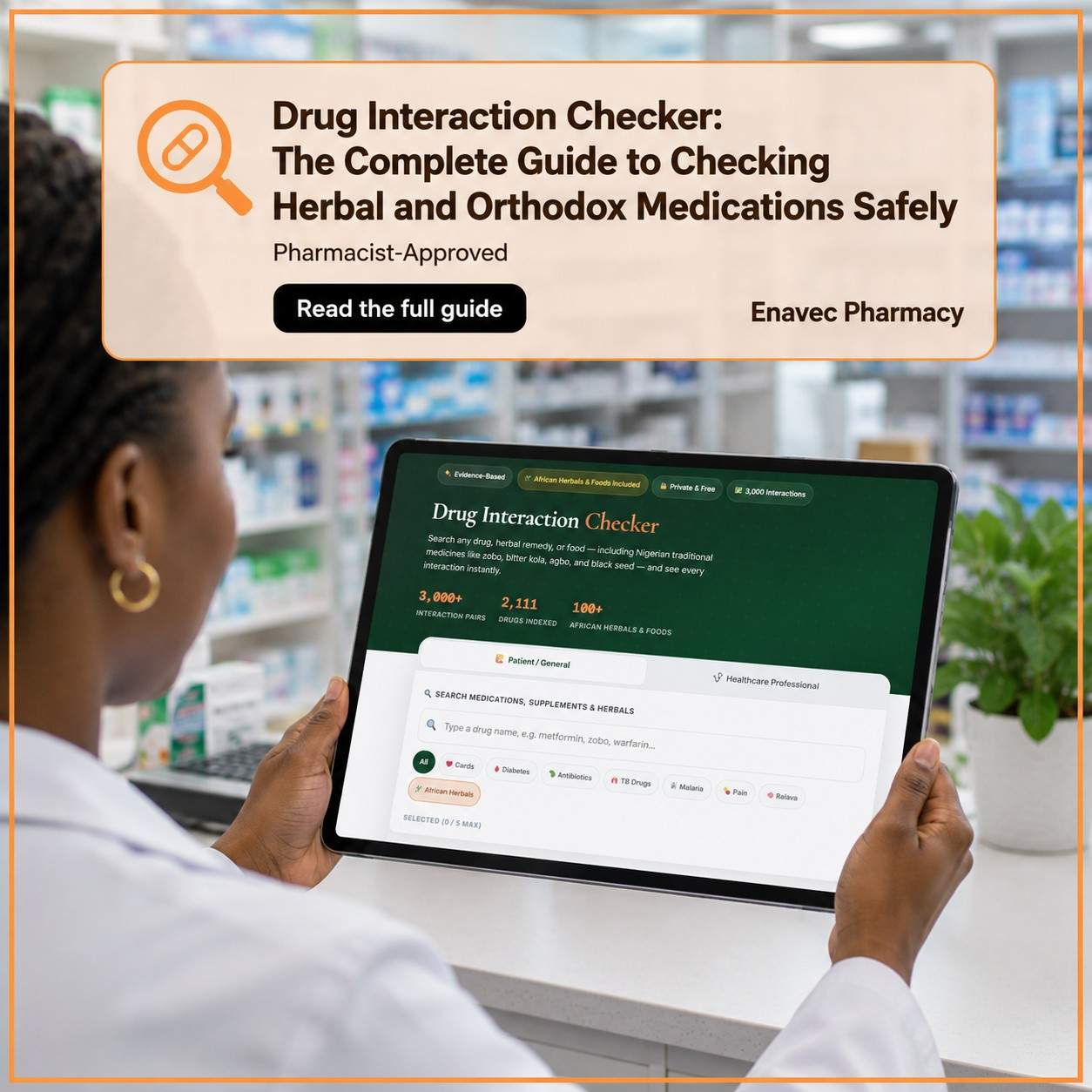
Drug Interaction Checker: The Complete Guide to Checking Herbal and Orthodox Medications Safely
Every day, someone walks into my pharmacy holding two or three different medications and asks whether they are safe to take together. Sometimes they have been taking that combination for months already. This guide explains how drug interactions work, which combinations cause the most harm globally, and how you can check yours right now using a free tool that covers both herbal and orthodox medications.
Why drug interactions are more common than people realise
The average adult over 50 takes at least two prescription medications regularly. Add in over-the-counter drugs like ibuprofen or antihistamines, then add the vitamins and herbal supplements most people take without mentioning to their doctor, and you have a daily routine that has never been formally reviewed for safety.
Most people assume their doctor is tracking all of this. The honest reality is that in a 15-minute consultation, a doctor rarely has time to cross-reference every supplement against every drug. That job often falls to pharmacists, and even then it only works if the patient discloses everything they are taking. Which most people do not, because they do not think of herbal products as medications worth disclosing.
A drug interaction happens when one substance changes the way another substance behaves in your body. It can make a drug stronger than it should be, weaker, or create entirely new side effects that neither substance would cause on its own. The result is sometimes dramatic and obvious. More often it is quiet: a medication that stops working, fatigue that seems unexplainable, blood pressure that will not stabilise despite treatment.
1 in 3
Adults takes at least one supplement alongside a prescription medication, and most have never used a medication interaction checker to verify the combination is safe.1
Key takeaway: Drug interactions do not always cause dramatic symptoms. Many show up as subtle changes in how well a medication works, not emergencies. The only reliable way to know is to check before you combine.
The herbal interactions causing the most harm right now
Most people assume that because something is natural, it is safe alongside their medications. Pharmacologically, many herbs are as active as pharmaceutical drugs. Some interact with prescription medications in ways that cause real harm.
St. John's Wort
This supplement is taken by millions of people in the United States, United Kingdom, Germany, and Australia for low mood and mild depression. It speeds up the liver enzymes that process certain medications, which means those drugs are cleared from the body too quickly to do their job. HIV antiretrovirals, birth control pills, blood thinners, and some cancer drugs are all affected. A person faithfully taking their antiretroviral medication while also using St. John's Wort may have dangerously low drug levels without any obvious symptoms until the viral load rebounds.
Garlic supplements and blood thinners
Garlic is genuinely good for cardiovascular health in moderate dietary amounts, which is why concentrated garlic supplements are popular globally. The problem is that garlic has antiplatelet properties, meaning it slows blood clotting. When combined with warfarin, aspirin, or any anticoagulant medication, the two effects stack. Bleeding from minor cuts becomes prolonged. For an older adult on long-term warfarin therapy, this is a serious combination that a drug interactions checker would flag immediately.
Ginkgo biloba and NSAIDs
Primarily taken for memory and cognitive support, ginkgo also reduces platelet aggregation. Combined with NSAIDs like ibuprofen or with aspirin, the bleeding risk is meaningfully increased. Many people taking daily low-dose aspirin for heart health are also taking ginkgo for brain health, two products marketed to exactly the same demographic, with no warning on either label about the other.
Ginseng and diabetes medications
Ginseng has real blood-glucose-lowering effects confirmed in clinical research. For someone managing type 2 diabetes on metformin or insulin, ginseng can push blood sugar lower than their medication is calibrated for. The result is hypoglycaemia from a supplement they are taking because it sounds healthy and energising. Running a drugs interaction checker before starting ginseng alongside any diabetes medication takes two minutes and prevents this entirely.
Echinacea and immunosuppressants
Echinacea is one of the most popular supplements in the United States and Canada, particularly during cold and flu season. For anyone on immunosuppressant medications (taken after organ transplants or to manage autoimmune conditions), echinacea directly counteracts the medication. The drug is working to suppress immune activity. The supplement is actively stimulating it. Using a medicine interaction checker before combining these two substances would flag this immediately.
Valerian root and sedatives
Valerian root, widely used as a natural sleep and anxiety remedy across Europe and North America, acts on the same brain receptors that benzodiazepines target. Taking valerian alongside prescribed anti-anxiety medications or sleep aids produces a combined sedative effect that can cause excessive drowsiness and impaired coordination. People reach for valerian because it feels like a gentler option than pharmaceutical sedatives. The chemistry does not agree with that assumption.
Key takeaway: Six of the most dangerous drug-supplement combinations involve products actively marketed to health-conscious adults. The harm is not from ignorance but from information that simply was not on the label.
From the Pharmacy Counter: Iloanugo Chijioke, B.Pharm, RPh, PCN 020322
A woman in her mid-fifties came in to collect her warfarin prescription. She mentioned in passing that she had started a garlic supplement her neighbour recommended for her blood pressure. She had been taking both for three weeks. When I ran the combination through our interaction checker, the garlic-warfarin flag came up immediately at a moderate-to-major severity rating.
She had noticed some unusual bruising on her arms and thought it was just age. We called her doctor that same afternoon to arrange an INR check. Her warfarin level had climbed well above her therapeutic range. We caught it before anything serious happened, but it was a very close call from a combination that felt completely harmless to her. That is the moment I always come back to when patients say it is just a supplement.
Orthodox medication combinations that carry serious risk
Herbal interactions get less attention than they deserve, but purely pharmaceutical combinations are also responsible for significant harm, especially as people age and take more medications at the same time.
Warfarin interacts with more medications than almost any drug in clinical use. Antibiotics, antifungals, NSAIDs, aspirin, certain antidepressants, and a long list of other substances all affect how warfarin works in the blood. Some combinations make it far more potent, raising bleeding risk dramatically. Others reduce its effectiveness, leaving someone unprotected against clots. Anyone on warfarin should treat a medication interactions checker as a non-negotiable step before starting anything new, including supplements.
SSRIs, the most widely prescribed class of antidepressants in the US and UK, interact with tramadol, certain migraine medications called triptans, and other drugs that affect serotonin levels to produce serotonin syndrome. This involves agitation, rapid heart rate, HYPERTENSION (HIGH BLOOD PRESSURE)" data-ail-id="1778699253555">high blood pressure, and in severe cases, seizures. It is entirely preventable. The problem is that prescribing often happens across different specialists who do not have full visibility of each other's decisions.
ACE inhibitors, used for blood pressure and heart failure management by tens of millions of people globally, interact with potassium supplements and certain diuretics in a way that elevates potassium levels in the blood. High potassium disrupts heart rhythm. For many patients this combination arrives innocuously: a cardiologist prescribes the ACE inhibitor, a nutritionist recommends potassium, and nobody checks whether the two belong together.
Key takeaway: Warfarin, SSRIs, and ACE inhibitors are three of the most prescribed drug classes globally. All three have well-documented interaction risks that a med interaction checker catches instantly.
Have a Question About Drug Interactions?
Our licensed pharmacist is available on WhatsApp. Send your medication list and get a professional answer, no appointment needed.
💬 Chat with the PharmacistWhy food and alcohol belong in this conversation too
Grapefruit juice is the most famous food interaction and also the most misunderstood. It is not about the sugar or the acidity. Grapefruit contains compounds that block the gut enzymes responsible for breaking down certain medications before they reach your bloodstream. The result is that much more of the drug gets absorbed than intended. Statins, calcium channel blockers, some antihistamines, and immunosuppressants are all affected. A single glass of grapefruit juice consumed around the time of a relevant medication can effectively overdose the patient unintentionally.
Alcohol interacts with a much wider range of medications than most people account for. Paracetamol and alcohol together put sustained strain on the liver that can cause damage with regular use, even at doses that would be individually harmless. Alcohol combined with sedatives, anti-anxiety medications, antihistamines, or opioids multiplies the central nervous system depression effect in ways that slow breathing dangerously. Alcohol can also speed up or slow down how certain medications are metabolised, changing their concentration in the blood unpredictably.
Key takeaway: Food and alcohol interactions are just as real as drug-drug interactions. A complete check using a drug interaction checker should include any food or drink you consume regularly alongside your medications.
How to actually use a drug interaction checker
The most effective way to use a medication checker is not to wait until something feels wrong. The right time to check is before you add anything new to your routine. Whether that is a new prescription, an over-the-counter medication, a herbal supplement, a vitamin, or even a dietary change that involves grapefruit regularly.
Most online tools only run a drug drug interaction check for orthodox pharmaceutical drugs against each other. Our free tool is different because it covers both herbal and orthodox medications in the same check. You enter a prescription drug alongside a herbal supplement or vitamin and see whether they interact and how serious that interaction is rated. It is free, requires no account, and takes under two minutes.
💊 Free Drug Interaction Checker
Enter any combination of prescription drugs, herbal supplements, vitamins, or over-the-counter medications. Covers both orthodox and herbal medications. No account needed. Results in under two minutes.
Enter every substance you currently take. That means prescription medications, over-the-counter drugs, herbal products, vitamins, and supplements. Review anything flagged as moderate or major. If you see a flag on a combination you are already taking, that is a conversation to bring to your pharmacist rather than a reason to stop a medication abruptly.
Make this check a habit any time something new enters your routine. That single habit prevents the majority of interaction-related harm that reaches pharmacies and emergency rooms.
What to tell your pharmacist
Bring a complete list. Not just the prescription medications. The herbal tea you drink daily. The multivitamin. The sleep supplement. Nigerian agbo, Ayurvedic preparations, Traditional Chinese Medicine formulations, adaptogen blends. All of it.
Pharmacists can only work with the information they are given. A complete list takes 30 seconds and prevents most preventable interactions. If you are not sure whether something qualifies as a medication worth disclosing, the answer is always yes. Run it through an interaction checker. Mention it at your next consultation. The thirty seconds it takes is worth considerably more than the consequences of a preventable interaction.
Key takeaway: Check before you combine. That is the whole message.
Myth vs Fact
Myth
If a supplement is sold without a prescription, it cannot interact with my medications.
Fact
Many of the most dangerous drug interactions involve over-the-counter products and herbal supplements. St. John's Wort, garlic, and ginkgo biloba all have documented, serious interactions with prescription drugs.2
Myth
A drug interaction always causes an obvious, immediate reaction.
Fact
Most drug interactions present silently. A medication stops working, a blood level drifts out of range, fatigue builds over weeks. By the time symptoms are obvious, damage has often already occurred.3
Myth
My doctor would have told me if any of my medications interacted.
Fact
Doctors have limited consultation time and often do not know every supplement a patient takes. Pharmacists are the medication safety checkpoint, but only when patients disclose everything they are taking.4
Myth
Spacing out medications throughout the day prevents all interactions.
Fact
Spacing only helps for a small category of absorption-based interactions, such as tetracycline with dairy. Pharmacokinetic interactions involving liver enzymes happen regardless of timing. A med interaction checker tells you which type you are dealing with.5
Myth
Online drug interaction checkers are not reliable enough to trust.
Fact
A pharmacist-built medication interactions checker draws from the same clinical databases used by healthcare professionals. It is not a replacement for a pharmacist consult but it is a reliable first step that flags what needs professional attention.6
Frequently Asked Questions
A drug interaction checker is a free tool that lets you enter any combination of medications or supplements and see whether those substances interact and how serious the interaction is rated. It flags major, moderate, and minor interactions so you know what to discuss with your pharmacist before taking anything new.
Yes. Herbal supplements like St. John's Wort, garlic, ginkgo biloba, ginseng, echinacea, and valerian root can all interact with prescription medications. These interactions can make your drugs less effective or cause serious side effects. Always use a drugs interaction checker before combining any supplement with a prescription drug.
Yes. The Enavec Pharmacy drug interaction checker is completely free. It requires no account, no sign-up, and no personal information. You can check any combination of drugs and herbal supplements in under two minutes at enavecpharmacy.com/drug-interaction-checker/
Warfarin interacts with a long list of substances including antibiotics, antifungals, NSAIDs like ibuprofen and aspirin, certain antidepressants, and herbal supplements like garlic and ginkgo biloba. Always use a medication interaction checker before adding anything new to your routine if you are on warfarin. The interaction can make your warfarin far too strong or too weak, both of which are dangerous.
Yes. Grapefruit contains compounds that block gut enzymes responsible for breaking down certain medications. This causes more of the drug to be absorbed than intended, effectively overdosing you. Statins, calcium channel blockers, and some antihistamines and immunosuppressants are among the drugs affected.
Serotonin syndrome is a potentially dangerous reaction caused by too much serotonin activity in the body. It can happen when SSRIs are combined with tramadol, migraine triptans, or other serotonergic drugs. Symptoms include agitation, rapid heart rate, high blood pressure, and in severe cases, seizures. It is entirely preventable by running an interaction check before combining these drug classes.
Always. Herbal teas, agbo, Ayurvedic preparations, vitamins, and adaptogen blends all count as medications worth disclosing. Your pharmacist can only check for interactions using the information you give them. A complete list takes 30 seconds and prevents most preventable interactions.
Pharmacist's Verdict

If you take more than one substance regularly, including supplements, vitamins, or herbal products alongside any prescription drug, checking for interactions is not optional. It is the single most effective thing you can do to protect yourself from a category of harm that presents silently and is almost entirely preventable. Use our free drug interaction checker before you add anything new to your routine, and bring a complete medication list (including every supplement) to every pharmacist or doctor consultation. If you are already on warfarin, SSRIs, or any immunosuppressant, make checking non-negotiable.
Iloanugo ChijiokeB.Pharm, RPh, PCN Reg. No. 020322
Licensed Pharmacist, Enavec Pharmacy
Licensed Pharmacist, Enavec Pharmacy
Related Reading
Ready to Check Your Medications?
Use our free drug interaction checker to verify any combination of prescription drugs, herbal supplements, and vitamins. Takes under two minutes. No account needed.
1 Journal of Patient Experience, supplement use data. 2 US FDA Drug Interaction guidance. 3 WHO Adverse Drug Reaction classification. 4 Community pharmacy consultation data, NHS. 5 Clinical Pharmacokinetics, enzyme-based interaction studies. 6 Drugs.com, Medscape, WebMD clinical database methodology.
Found this helpful? Share it:
⚠️
Medical & Affiliate Disclaimer This article is for informational purposes only and does not constitute medical advice. Always consult a qualified healthcare provider before starting any supplement or medication. Some links in this post are affiliate links - if you purchase through them, Enavec Pharmacy may earn a small commission at no extra cost to you.
