
- Your cart is empty
- Continue Shopping
Over-the-Counter Medicines: The Complete Guide
- OTC and Self-Care
- Posted on
-
by enavec_pharmacy
- 0 comments
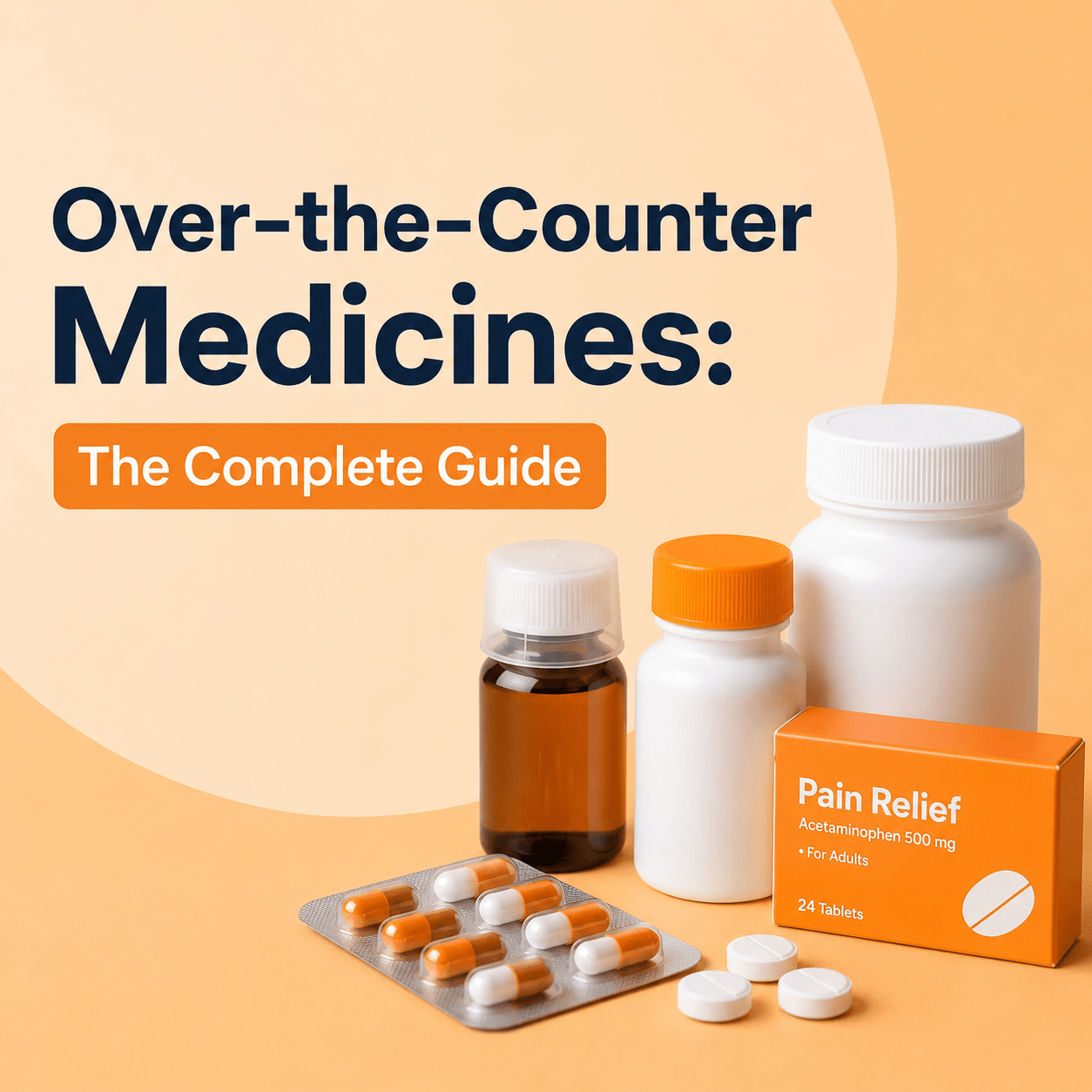
Pillar Guide · OTC Medicines
Over-the-Counter Medicines: The Complete Guide
Over-the-counter (OTC) medicines are safe and effective when used correctly — but they can cause real harm when they are not. This is your complete pharmacist-written reference: what OTC medicines are, the most in-demand categories, how to choose the right product, and when to stop self-treating and see a doctor.
Over-the-counter medicines are drugs available without a prescription that can be purchased directly from a pharmacy, supermarket, or online store.[1] They treat a wide range of everyday conditions — from headaches and allergies to heartburn and fungal infections — but "available without a prescription" does not mean "risk-free." In my experience at the pharmacy counter, the patients who get the best results from OTC medicines are those who understand what they are taking, why, and — critically — when to stop and seek professional help.
This complete pillar guide covers the six most in-demand OTC categories globally, with pharmacist-vetted product recommendations and dosing guidance that applies whether you are buying at a Boots in London, a CVS in New York, a Guardian in Singapore, or a pharmacy in Lagos. The pharmacology does not change by location — only the brand names do.
What Exactly Is an Over-the-Counter Medicine?
Understanding what separates OTC from prescription-only medicines protects you from misuse and sets the right expectations for treatment.
An OTC medicine has been reviewed by a medicines regulator — the FDA (USA), MHRA (UK), TGA (Australia), or NAFDAC (Nigeria) — and approved for self-use because its risk-benefit profile is acceptable without a prescriber's assessment.[2] When purchasing in Nigeria, look for a valid NAFDAC registration number on the pack. For international purchases, NSF or USP certification confirms quality-verified manufacturing.
The key distinction: prescription (Rx) medicines require a clinician to assess whether they are right for you. OTC medicines have been judged safe to self-select — but this comes with the expectation that you read and follow the label. Many OTC medicines interact with other drugs, are unsafe in pregnancy, or carry dose limits that prevent harm. Ignoring these is where most OTC-related harm occurs.
The 6 Most In-Demand OTC Categories
🤧
Cold, Cough & Allergy
Antihistamines, expectorants, decongestants, nasal sprays
🫃
Digestive & Gut Health
Antacids, PPIs, laxatives, anti-diarrhoeals, rehydration salts
🧴
Skin & Topical
Antifungals, hydrocortisone, antiseptics, acne creams
👶
Children's Medicines
Paediatric paracetamol, ibuprofen, gripe water, oral rehydration
💪
Vitamins & Supplements
Vitamin D3, C, iron, zinc, omega-3, magnesium
💡 Key Takeaway
OTC does not mean consequence-free. Every OTC medicine has a maximum daily dose, contraindications, and interactions. Read the full label every time — even for products you have used before, as formulations change.
Pain Relievers & Fever Reducers — Your Complete Reference
Pain and fever are the most common reasons people reach for an OTC medicine. Understanding the difference between the main options prevents both under-treatment and dangerous overdose.
There are four main OTC pain relievers and fever reducers. They work through different mechanisms and have different safety profiles — the right choice depends on your condition, your medical history, and whether you are pregnant.[3]
| Medicine | Mechanism | Adult OTC Dose | Key Caution |
|---|---|---|---|
| Paracetamol (Tylenol, Panadol, acetaminophen) | Reduces brain fever signal; mild pain modulation | 500–1,000 mg every 4–6 hrs; max 4,000 mg/day | Liver toxicity in overdose — NEVER exceed max dose [4] |
| Ibuprofen (Advil, Nurofen, Brufen) | NSAID — blocks prostaglandins (pain + swelling) | 200–400 mg every 6–8 hrs; max 1,200 mg/day OTC | Take with food; avoid in kidney disease, peptic ulcer, pregnancy [5] |
| Aspirin (Disprin, Bayer) | NSAID + antiplatelet | 325–650 mg every 4–6 hrs | Never in children under 16 — Reye's syndrome risk [6] |
| Naproxen (Aleve) | Long-acting NSAID | 220 mg every 8–12 hrs; max 440 mg/day OTC | Higher cardiovascular risk long-term; avoid in heart failure [7] |
For most everyday pain — headache, period pain, dental pain, muscle soreness — ibuprofen is the most versatile choice because it addresses both pain and underlying inflammation. Patients frequently ask me whether they can take something stronger when ibuprofen is not working, and my answer is always to first confirm they took it with food, at the correct dose, and early enough. Ibuprofen taken at the first sign of a migraine works dramatically better than the same dose given three hours later.
For patients with a stomach ulcer, kidney disease, or pregnancy, paracetamol (acetaminophen) is the safer first-line option.[8] It is equally effective for fever. The most important safety rule: always check every other medicine you are taking for hidden paracetamol — cold tablets, "PM" sleep formulas, and combination cold-and-flu products frequently contain it. Double-dosing is the most common OTC overdose error globally.
⚠️ Critical Safety Warning
Never combine two NSAIDs (e.g. ibuprofen + aspirin together). It dramatically increases stomach bleeding risk with no added pain relief. Paracetamol and ibuprofen can safely be combined or alternated — this is often more effective than either alone.[9]
💊
Pain Relief & Fever — Pharmacist Picks
OTC · Pain & Fever · Available Worldwide on iHerbThese are two of the most trusted, globally available OTC pain and fever products. Both are used by millions of patients worldwide and are available without prescription.
TYLENOL
500 mg
EXTRA STRENGTH
50 Caplets
Tylenol
Extra Strength Acetaminophen 500 mg · 50 Caplets
OTC Pain & Fever · GlobalThe gold-standard paracetamol (acetaminophen) tablet. Safe on an empty stomach. First choice for headache, fever, and pain where NSAIDs are contraindicated. Max 4,000 mg/day.
Buy on iHerb
ADVIL
200 mg
IBUPROFEN
100 Coated Caplets
Advil
Ibuprofen Tablets 200 mg · 100 Coated Caplets
OTC NSAID · Pain & Anti-InflammatoryThe world's most trusted NSAID for pain and inflammation. Effective for headache, period pain, back pain, dental pain, and fever. Take with food. Max 1,200 mg/day OTC.
Buy on iHerbThis post contains affiliate links. If you purchase through our iHerb links, we may earn a small commission at no extra cost to you. We only recommend products we would genuinely suggest to our patients.
💡 Key Takeaway
Paracetamol is the safest choice for stomach-sensitive patients and during pregnancy. Ibuprofen is superior for inflammation-driven pain. Combining both — taken at the same time — is safe and often more effective than either alone for moderate pain.
Have a question about OTC medicines?
Our PCN-licensed pharmacists answer within 2 hours on WhatsApp →
Cold, Cough & Allergy Medicines
Allergy and respiratory OTC medicines are among the most confused categories. This section cuts through the noise with evidence-based guidance.
A common cold is caused by a virus — no OTC medicine cures it.[10] What OTC medicines can do is significantly reduce individual symptoms while your immune system clears the infection. For allergies, the goal is different: blocking the histamine response before it triggers symptoms.
Second-generation antihistamines — loratadine (Claritin), cetirizine (Zyrtec), and fexofenadine (Allegra) — are the OTC standard for allergic rhinitis (hayfever), hives, and dust-mite allergy.[11] They work for 24 hours, cause little or no drowsiness, and are available globally. For chest congestion from a cold, guaifenesin (Mucinex) is the most evidence-backed OTC expectorant — it thins mucus so you can cough it out more productively.
🤧
Cold, Cough & Allergy — Pharmacist Picks
OTC · Allergy & Respiratory · Available Worldwide on iHerbA non-drowsy antihistamine for daily allergy control and a clinically proven expectorant for chest congestion — two of the most useful OTC purchases for allergy and cold season.
🤧
CLARITIN
NON-DROWSY
Loratadine 10 mg
30 Tablets · 24 Hr
Claritin
Non-Drowsy Loratadine 10 mg · 30 Tablets
OTC Antihistamine · 24-Hour · Non-DrowsyOriginal prescription-strength loratadine. 24-hour non-drowsy relief for hayfever, indoor and outdoor allergies, sneezing, itchy eyes, and runny nose. One tablet daily.
Buy on iHerb
🫁
MUCINEX
12-HOUR RELIEF
Guaifenesin 600 mg
40 Bi-Layer Tablets
Mucinex
Guaifenesin 600 mg · 40 Extended-Release Tablets
OTC Expectorant · 12-Hour Chest CongestionThe #1 doctor-recommended OTC expectorant. Bi-layer tablet releases immediately then extends for 12 hours. Thins and loosens mucus to relieve chest congestion. Take with a full glass of water.
Buy on iHerbAffiliate disclosure: purchases through our iHerb links support Enavec Pharmacy at no extra cost to you.
🧮 Free Tool
Sneezing, itchy eyes, skin reactions — is it allergy, intolerance, or something else? Use our free Allergy Symptom Identifier for a personalised assessment in under 2 minutes.
→ Open the Allergy Symptom Identifier
💡 Key Takeaway
For daytime allergy control, choose a non-drowsy second-generation antihistamine (loratadine or cetirizine). For chest congestion from a cold, guaifenesin — taken with plenty of water — is the most evidence-backed OTC option. Sedating antihistamines (chlorpheniramine, diphenhydramine) are for night-time use only.
Digestive & Gut OTC Medicines
Gut complaints are among the top reasons people visit a pharmacy. The right OTC choice depends entirely on matching the product to the specific digestive problem.
Antacids (calcium carbonate, magnesium hydroxide — Tums, Gaviscon, Rennie) neutralise acid already present in the stomach. They work within minutes and are ideal for occasional heartburn after a large meal.[12] Proton pump inhibitors (PPIs) like omeprazole (Prilosec, Losec) work differently — they block the proton pumps that produce acid. They take 1–4 days to reach full effect but provide all-day and all-night protection, making them the right choice for persistent or frequent heartburn (occurring two or more days per week).[13]
From what I see in practice, one of the most misunderstood aspects of OTC gut medicines is that PPIs are not meant to be taken indefinitely without medical review. Use them for a 14-day course as directed. If symptoms return repeatedly, that is a signal to see a doctor — persistent acid reflux can have serious underlying causes that OTC treatment alone will mask.
🫃
Digestive & Gut Health — Pharmacist Picks
OTC · Heartburn & Acid Relief · Available Worldwide on iHerbFor occasional heartburn, a fast-acting antacid. For frequent heartburn (2+ days/week), a 24-hour PPI. These two products cover both ends of the acid relief spectrum.
PRILOSEC
OTC
Omeprazole 20mg
42 Tablets
Prilosec
OTC Omeprazole 20 mg · 42 Tablets (3-Week Supply)
OTC PPI · 24-Hour Heartburn Relief#1 doctor and gastroenterologist-recommended heartburn medicine. One tablet each morning before eating. 24-hour zero heartburn protection. Treats frequent heartburn over a 14-day course.
Buy on iHerb
NOW FOODS
SUPER DIGESTIVE
ENZYMES
90 Tablets
NOW Foods
Super Digestive Enzymes · 90 Tablets
Supplement · Bloating & Digestive SupportBroad-spectrum digestive enzymes (protease, amylase, lipase, cellulase) to support breakdown of proteins, fats, and carbohydrates. Especially helpful for bloating, gas, and indigestion. Take one with each main meal.
Buy on iHerbAffiliate disclosure: purchases through our iHerb links support Enavec Pharmacy at no extra cost to you.
⚠️ When an OTC is Not Enough
Heartburn more than twice a week, blood in stool, difficulty swallowing, unexplained weight loss, or pain that radiates to the shoulder or jaw are all red-flag symptoms. Do not self-treat these — see a doctor promptly.
💡 Key Takeaway
Use antacids for occasional heartburn after meals. Use omeprazole (Prilosec/Losec) for persistent or frequent heartburn — one tablet each morning before eating for 14 days. If symptoms return after the course, speak to a doctor rather than repeating the cycle indefinitely.
Skin & Topical OTC Medicines
Skin conditions account for a large share of pharmacy consultations worldwide. Most mild cases can be effectively managed with OTC topical medicines when the right product is chosen for the right condition.
The most common skin conditions managed with OTC medicines include fungal infections (athlete's foot, ringworm, jock itch), mild inflammatory skin conditions (eczema, contact dermatitis), acne, and minor wounds. The cardinal rule: always confirm the diagnosis before treating. Applying an antifungal cream to a rash caused by eczema will make it worse. Applying a steroid (hydrocortisone) cream to a fungal infection will suppress the immune response and allow the infection to spread.
Antifungal creams containing clotrimazole 1% (Canesten in UK/Nigeria, Lotrimin in USA) are the global first-line OTC treatment for athlete's foot (tinea pedis), ringworm (tinea corporis), and jock itch (tinea cruris).[14] Apply twice daily and continue for the full recommended course even after visible improvement — stopping too early is the primary cause of recurrence.
🧴
Skin & Topical — Pharmacist Picks
OTC · Antifungal & Skin Care · Available Worldwide on iHerbA clinically proven antifungal cream and a ceramide-based moisturiser that repairs the skin barrier — two products every medicine cabinet should have for skin management.
LOTRIMIN
AF
Clotrimazole 1%
CREAM
0.53 oz
Lotrimin
Antifungal Clotrimazole Cream 1% · 0.53 oz
OTC Antifungal · Athlete's Foot · RingwormCures most athlete's foot, jock itch, and ringworm. Apply to clean, dry skin twice daily — morning and night. Use daily for 4 weeks for athlete's foot, 2 weeks for jock itch. Same active ingredient as Canesten (UK/Nigeria).
Buy on iHerb
CERAMEDX
RESTORING LOTION
Ceramide Complex
354 ml · Fragrance-Free
Ceramedx
Restoring Ceramide Body Lotion · Fragrance-Free · 12 oz
Dermatologist-Recommended · Dry Skin & EczemaRestores the skin barrier with ceramides, hyaluronic acid, and niacinamide. Fragrance-free and suitable for eczema-prone skin. Apply immediately after shower on damp skin for maximum moisture lock. Daily body protection.
Buy on iHerbAffiliate disclosure: purchases through our iHerb links support Enavec Pharmacy at no extra cost to you.
💡 Key Takeaway
Complete the full antifungal treatment course even when the skin looks clear — residual fungal spores cause relapse. For dry or eczema-prone skin, ceramide-based moisturisers are the evidence-backed first-line recommendation from dermatologists worldwide.
Children's OTC Medicines — Safe Dosing & What to Buy
Children's OTC medicines demand extra precision. The correct dose is calculated by weight, not by age alone — and the consequences of overdosing a child are far more serious than in adults.
The two first-line OTC medicines for children are paediatric paracetamol (acetaminophen) and paediatric ibuprofen. Both are available globally as liquids, chewable tablets, and suppositories. The key principle: dose by weight, not age. A large 8-year-old and a small 8-year-old require significantly different doses of the same medicine.[15]
Important: ibuprofen is not recommended for children under 3 months or weighing under 5 kg, and should be used cautiously in children with kidney problems, asthma, or chickenpox.[16] Aspirin must never be given to children under 16. For the exact weight-based dose for your child, use our dedicated calculator below.
👶
Children's Medicines — Pharmacist Picks
OTC · Paediatric · Available Worldwide on iHerbTwo trusted children's OTC formulations for fever and pain management — always dose by your child's weight and follow the label instructions precisely.
GENEXA
KIDS' PAIN & FEVER
Acetaminophen
160 mg / 5 ml
Ages 2–11 · 4 fl oz
Genexa
Kids' Pain & Fever · Acetaminophen 160 mg/5 ml · 4 fl oz
OTC Paediatric · Ages 2–11 · Fever & PainOrganic acetaminophen liquid for children ages 2–11. Clean-label formula — no artificial dyes, flavours, or parabens. Relieves fever, headache, and minor pain. Dose by weight using the included dosing cup.
Buy on iHerb
CURE HYDRATION
ORS · WHO Formula
Electrolyte Mix
14 Packets
Cure Hydration
ORS Electrolyte Mix · WHO Formula · 14 Packets
OTC · Oral Rehydration · Children & AdultsWHO-formula oral rehydration salts — the most important OTC product for children with diarrhoea or vomiting. Replaces fluids and electrolytes more effectively than plain water. One sachet per loose stool in 200 ml water. Safe from infancy.
Buy on iHerbAffiliate disclosure: purchases through our iHerb links support Enavec Pharmacy at no extra cost to you.
🧮 Children's Dose Calculator
Not sure of the right dose for your child's weight? Use our free Children's OTC Medicine Dose Calculator — enter your child's weight for the precise safe dose of paracetamol or ibuprofen. No sign-up needed.
→ Open Children's OTC Dose Calculator
💡 Key Takeaway
Always dose paediatric medicines by weight. Never give aspirin to a child under 16. Oral rehydration salts (ORS) are the single most important OTC product for a child with diarrhoea — rehydration saves more lives than any antidiarrhoeal medicine.
Vitamins & Supplements — What the Evidence Actually Supports
The supplement aisle is the most overcrowded and most oversold section of any pharmacy. This section focuses only on those with solid clinical evidence behind them.
Not all supplements are created equal. The ones with the strongest evidence for most people are Vitamin D3 (deficiency is extremely common globally — especially in people with darker skin living in low-sunlight climates), magnesium glycinate (supports sleep, muscle function, and hundreds of enzymatic processes), omega-3 fish oil (cardiovascular and cognitive health), and zinc (immune function and wound healing).[17]
Vitamin D3 is the supplement I recommend most frequently — particularly to patients who have recently moved from a tropical country to the UK, Northern Europe, Canada, or the northern United States, where UVB sunlight is insufficient for skin synthesis from October to April.[18] The NHS recommends 400 IU daily for most adults; however, those with confirmed deficiency or high-risk groups (darker skin, little sun exposure) often require 1,000–2,000 IU under professional guidance.
💪
Vitamins & Supplements — Pharmacist Picks
Supplements · Evidence-Based · Available Worldwide on iHerbTwo of the most evidence-backed daily supplements — Vitamin D3 for immune support, bone health, and mood; and magnesium glycinate for sleep quality and muscle function.
SPORTS RESEARCH
VITAMIN D3
2,000 IU
360 Softgels
Sports Research
Vitamin D3 2,000 IU with Coconut Oil · 360 Softgels
Supplement · Vitamin D3 · Immune & Bone HealthVitamin D3 (cholecalciferol) in a cold-pressed coconut oil softgel for enhanced absorption. Supports immune function, bone density, mood regulation, and muscle health. Year-round supplementation especially important in low-sunlight climates.
Buy on iHerb
NOW FOODS
MAGNESIUM
GLYCINATE
180 Tablets
NOW Foods
Magnesium Glycinate 180 Tablets
Supplement · Sleep · Muscle & Nerve SupportHighly bioavailable magnesium chelate — the most gentle form on the stomach. Supports sleep quality, reduces muscle cramps and restless legs, and assists over 300 enzymatic reactions. Take 1–2 tablets before bed. Essential for active adults and frequent travellers.
Buy on iHerbAffiliate disclosure: purchases through our iHerb links support Enavec Pharmacy at no extra cost to you.
🧮 Free Deficiency Checker
Fatigue, muscle weakness, low mood, or frequent illness — these could indicate a vitamin or mineral deficiency. Use our free Vitamin & Nutrient Deficiency Checker to understand which nutrients may be affecting your health.
→ Check Your Nutrient Status
💡 Key Takeaway
Vitamin D3 and magnesium glycinate are the two supplements most likely to benefit the largest number of people globally. Both are poorly supplied by modern diets and especially low in people living in cold-climate countries with limited sun exposure. Quality of supplement matters — bioavailability varies significantly between formulations.
The 7 Universal OTC Safety Rules Every Patient Should Know
These rules apply to every OTC medicine, in every country, every time — whether you are buying at a high-street pharmacy or online.
- Read the full label every time. Ingredients and warnings change between reformulations.[19]
- Check for hidden paracetamol (acetaminophen). Cold tablets, "PM" pain relievers, combination cold-and-flu products, and many branded combination OTCs contain paracetamol. Adding additional paracetamol on top is the most common cause of OTC liver damage globally.
- Never exceed the maximum daily dose. The ceiling is set for safety — going above it increases toxicity with no additional benefit.
- Check for drug interactions. Ibuprofen interacts with lithium, methotrexate, and diuretics. Antihistamines are potentiated by alcohol and sedatives. Use our Drug Interaction Checker for any new combination.[9]
- Extra caution in pregnancy and breastfeeding. Ibuprofen should not be used from 20 weeks of pregnancy onwards. Aspirin is generally avoided throughout. Paracetamol at the lowest effective dose for the shortest time is the first-line option — but always seek professional advice.
- Dose children by weight, not age. Always use a verified weight-based calculator for paediatric OTC dosing.
- Know when to escalate. Symptoms lasting more than 7–10 days, worsening instead of improving, accompanied by high fever, rash, difficulty breathing, or confusion — these require professional assessment, not more OTC medicine.
🧮 Drug Interaction Checker
Taking more than one medicine? Our free Drug Interaction Checker lets you quickly identify potential interactions before combining any OTC or prescription medicines.
→ Check for Drug Interactions
💡 Key Takeaway
The single most preventable OTC harm globally is accidental paracetamol overdose from combining multiple products that each contain it. Before your second dose of anything, check every medicine in your current routine for acetaminophen/paracetamol content.
Myth vs. Fact — 5 OTC Misconceptions That Can Cause Real Harm
These are the misconceptions I hear most frequently — and the ones most likely to result in harm if left uncorrected.
❌ Myth 1"OTC medicines are safe because they don't need a prescription."
✅ FactOTC medicines are safe when used correctly. Paracetamol overdose is one of the leading causes of acute liver failure worldwide — and most of it is accidental. [4]
❌ Myth 2"Taking more than the recommended dose gives faster, stronger relief."
✅ FactOTC doses are set at the therapeutic maximum for that medicine. Exceeding them adds toxicity risk with no extra efficacy. [19]
❌ Myth 3"Natural or herbal OTCs have no side effects or interactions."
✅ FactSt John's Wort significantly reduces the efficacy of contraceptive pills and antiretrovirals. Echinacea interacts with immunosuppressants. All bioactive substances carry interaction risk. [20]
❌ Myth 4"Antibiotics are fine to take without a prescription when I feel sick."
✅ FactAntibiotics are prescription-only in most countries for critical reasons. Inappropriate use is the primary driver of antimicrobial resistance — one of the greatest threats to global health. [21]
❌ Myth 5"I can take ibuprofen and aspirin together for stronger pain relief."
✅ FactCombining two NSAIDs dramatically raises the risk of gastrointestinal bleeding with no additional benefit. Paracetamol + ibuprofen is the safe combination for stronger relief. [9]
💊 Pharmacist's Verdict — Enavec Pharmacy
My single most important recommendation for OTC safety: always check every product you take for paracetamol/acetaminophen content before adding another dose. It is the most preventable OTC harm I see — globally, in every country, every year.
For most adults: ibuprofen taken with food is the most versatile OTC pain reliever for inflammation-driven pain. For fever in adults, paracetamol or ibuprofen are both appropriate — paracetamol has the better stomach safety profile. For allergies, loratadine or cetirizine are the gold standard for non-drowsy 24-hour control. For heartburn occurring more than twice a week, a 14-day course of OTC omeprazole is the evidence-backed choice.
And the rule I repeat to every patient: if symptoms do not improve within 7–10 days of appropriate OTC treatment, that is your body telling you it needs more than an OTC can provide. Use the calculator tools on this page to personalise your assessment, and our PCN-licensed pharmacists are available on WhatsApp for any question you have.
PCN-Licensed Pharmacist · Enavec Pharmacy · Lagos, Nigeria
Commonly Searched OTC Topics
>Best OTC for headache
>Ibuprofen vs Paracetamol
>OTC for period pain
>Best non-drowsy antihistamine
>OTC for heartburn and reflux
>Safe OTC medicines in pregnancy
>Children's paracetamol dose by weight
>OTC for cold and flu
>Antifungal cream for ringworm
>Drug interaction checker
>Vitamin D deficiency symptoms
>NAFDAC approved OTC medicines
Disclaimer: This article is for informational purposes only and does not constitute medical advice. Always consult your pharmacist or doctor before starting any medicine or supplement, particularly if you are pregnant, breastfeeding, managing a chronic condition, or taking other prescription medicines.
References
- U.S. Food & Drug Administration. Understanding Over-the-Counter Medicines. FDA Consumer Update. fda.gov
- NAFDAC Nigeria. Regulation of Over-the-Counter Medicines. National Agency for Food and Drug Administration and Control. nafdac.gov.ng
- Grand View Research. Over-the-Counter (OTC) Drugs Market Size Report. 2023.
- Larson AM. Acetaminophen hepatotoxicity. Clinics in Liver Disease. 2007;11(3):525–548.
- Sostres C et al. Adverse effects of NSAIDs on upper gastrointestinal tract. Best Practice & Research Clinical Gastroenterology. 2010;24(2):121–132.
- Committee on Infectious Diseases. Aspirin and Reye Syndrome. Pediatrics. 1982;69(6):810–812.
- European Medicines Agency. Naproxen: summary of product characteristics. EMA. 2015.
- WHO. WHO Model List of Essential Medicines, 23rd Edition. World Health Organization; 2023.
- Johnsen SP et al. Risk of hospitalisation for myocardial infarction among users of NSAIDs. Archives of Internal Medicine. 2005;165(9):978–984.
- Allan GM, Arroll B. Prevention and treatment of the common cold: making sense of the evidence. CMAJ. 2014;186(3):190–199.
- Bousquet J et al. Allergic Rhinitis and its Impact on Asthma (ARIA) guidelines. Allergy. 2008;63(Suppl 86):8–160.
- Zajac P et al. Current clinical guidelines for the evaluation and management of dyspepsia. Osteopathic Family Physician. 2013;5(2):79–85.
- Strand DS, Kim D, Peura DA. 25 years of proton pump inhibitors: a comprehensive review. Gut and Liver. 2017;11(1):27–37.
- NICE. Fungal skin infection — body and groin: Clinical Knowledge Summary. 2023. cks.nice.org.uk
- BNF for Children. Prescribing for children: weight-based dosing principles. British National Formulary. 2024.
- NICE. Feverish illness in children. Clinical Guideline CG160. 2013 (updated 2023). nice.org.uk
- Holick MF et al. Evaluation, Treatment, and Prevention of Vitamin D Deficiency: an Endocrine Society Clinical Practice Guideline. Journal of Clinical Endocrinology & Metabolism. 2011;96(7):1911–1930.
- Crowe FL et al. Vitamin D deficiency by ethnicity: UK Biobank study of 440,581 participants. Clinical Nutrition. 2020. doi:10.1016/j.clnu.2020.05.017
- Moore TJ et al. Serious adverse drug events reported to the FDA, 1998–2005. Archives of Internal Medicine. 2007;167(16):1752–1759.
- Henderson L et al. St John's Wort: drug interactions and clinical outcomes. British Journal of Clinical Pharmacology. 2002;54(4):349–356.
- World Health Organization. Global action plan on antimicrobial resistance. WHO; 2015. who.int
Found this helpful? Share it:
⚠️
Medical & Affiliate Disclaimer This article is for informational purposes only and does not constitute medical advice. Always consult a qualified healthcare provider before starting any supplement or medication. Some links in this post are affiliate links - if you purchase through them, Enavec Pharmacy may earn a small commission at no extra cost to you.
